
FELICIA IMPASTATO
Cinisi, Sicily
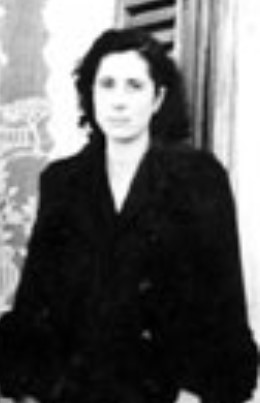
Photo : Wikimedia Commons, CC0
SHE STOOD UP — SO HER SON WOULD NOT BE FORGOTTEN
Felicia’s story is one of those that stays with you.
Her husband was a friend of the mafia. Her son died fighting it. And for 22 years — through isolation, through grief, through a justice system that repeatedly looked the other way — she refused to let that death become just another silence.
What struck me wasn’t only her courage. It was her resolution. Nothing could stop her. Nothing.
In Sicily, in that era, omertà wasn’t just a code. It was the air people breathed. Speaking up — especially as a woman, especially against the people your own husband called friends — was almost unthinkable.
She did it anyway. Because her son’s memory had become the most important thing in her life. And because love, when it is that fierce and that clear, is one of the most powerful forces that exists.
Felicia Bartolotta was born in 1916 in Cinisi, a small town west of Palermo, into a modest but honest family. In 1947, she married Luigi Impastato, a man tied to the local mafia — a world she had always distrusted and quietly resisted.
Her son Giuseppe, known as Peppino, was born in 1948. He grew up watching his father’s world with increasing revulsion. As a young man, he broke with his father entirely and threw himself into left-wing political activism and community radio. Through Radio Aut, he openly mocked and denounced the local mafia boss, Gaetano Badalamenti — by name, on air, in a town where everyone knew who Badalamenti was and what he was capable of.
On the morning of 9 May 1978, Peppino’s body was found on a railway track, shattered by dynamite. He was 30 years old.
The police and press initially pointed to suicide — or a botched attack by Peppino himself. Felicia knew otherwise. And she said so.
A CHOICE WITH CONSEQUENCES
In the days following Peppino’s murder, Felicia made a decision that would define the rest of her life: she would pursue justice through the courts, publicly, regardless of the pressure from her husband’s relatives urging her to stay silent.
She also opened her home. Anyone who wanted to know the truth about her son was welcome.
It was not a comfortable path. For years, only a handful of people stood by her. The investigation stalled, was closed, reopened. Felicia’s husband died. Badalamenti remained free.
She kept going.
In the 1990s, a former member of the Cinisi mafia turned state witness and named Badalamenti as the mastermind of Peppino’s murder. The investigation was formally reopened in 1996. An arrest warrant was issued in 1997.
The trial took place 22 years after the killing.
Felicia attended. When the moment came, she pointed at Badalamenti across the courtroom and accused him directly. He was convicted. So was his accomplice.
When Italy’s parliamentary Antimafia Commission delivered a report confirming that investigators had misled the original inquiry, Felicia responded with four words:
“You have resuscitated my son.”
WHAT SHE LEFT BEHIND
Felicia Impastato died on 7 December 2004, in her home in Cinisi, at the age of 88.
The following year, her house — located a hundred steps from the Badalamenti family home — became the Felicia and Peppino Impastato Memorial House, open to the public and particularly to young people, whom she had always welcomed with warmth.
To those young visitors, she always said the same thing:
“Keep standing up. Keep your spine straight.”
In 2016, she was honoured as one of the Righteous at the Garden of the Righteous in Milan — a recognition given to individuals who chose courage over compliance, at personal cost, without guarantee of outcome.
Her story was told in the 2000 film I cento passi and in a 2016 RAI television drama in which she was portrayed by actress Lunetta Savino.
WHY THIS PORTRAIT IS HERE
Felicia Impastato was not an activist by training or vocation. She was a mother, a housewife, a woman born into a Sicily where silence was the law — especially for women.
She broke that law. Not with weapons or headlines, but with persistence, an open door, and a refusal to let a convenient lie stand in for the truth.
There is a word in Italian — bellezza. Beauty. Not the decorative kind. The kind that asks something of us.
Felicia had it.
That is what Omertà Overcomers is about.
SOURCES
Gariwo Foundation — Felicia Bartolotta Impastato — en.gariwo.net
Wikipedia IT — Felicia Impastato
Visit Sicily — Memory House Peppino Impastato — visitsicily.info
nonsprecare.it — Felicia Impastato, Mothers Against the Mafia — March 2026
Wikipedia EN — Giuseppe Impastato